
Easy Magical Heart Art Idea With Salt and Watercolor


There is nothing more magical than seeing your drawings come to life after painting over them. Kids will love creating different heart drawings and exploring the properties of watercolor with this simple, magical heart painting idea.
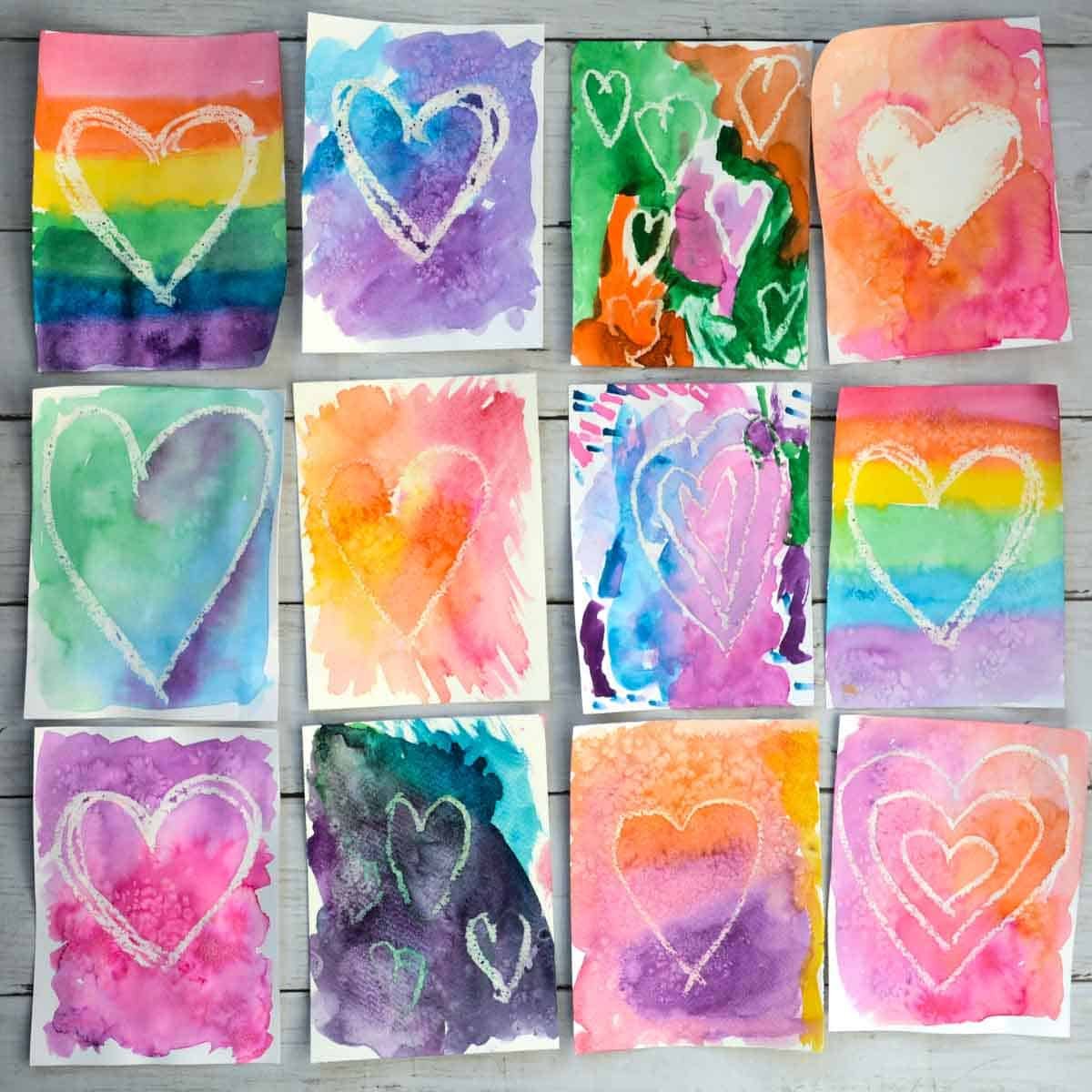
After years of teaching art to children, I never tire of watercolor resist projects and heart art projects. Whether with toddlers, preschoolers, or elementary school students, kids are amazed at how their drawings magically appear!
If you love this art technique, you have to also check out these magical snowflake paintings and these other easy watercolor art project ideas.
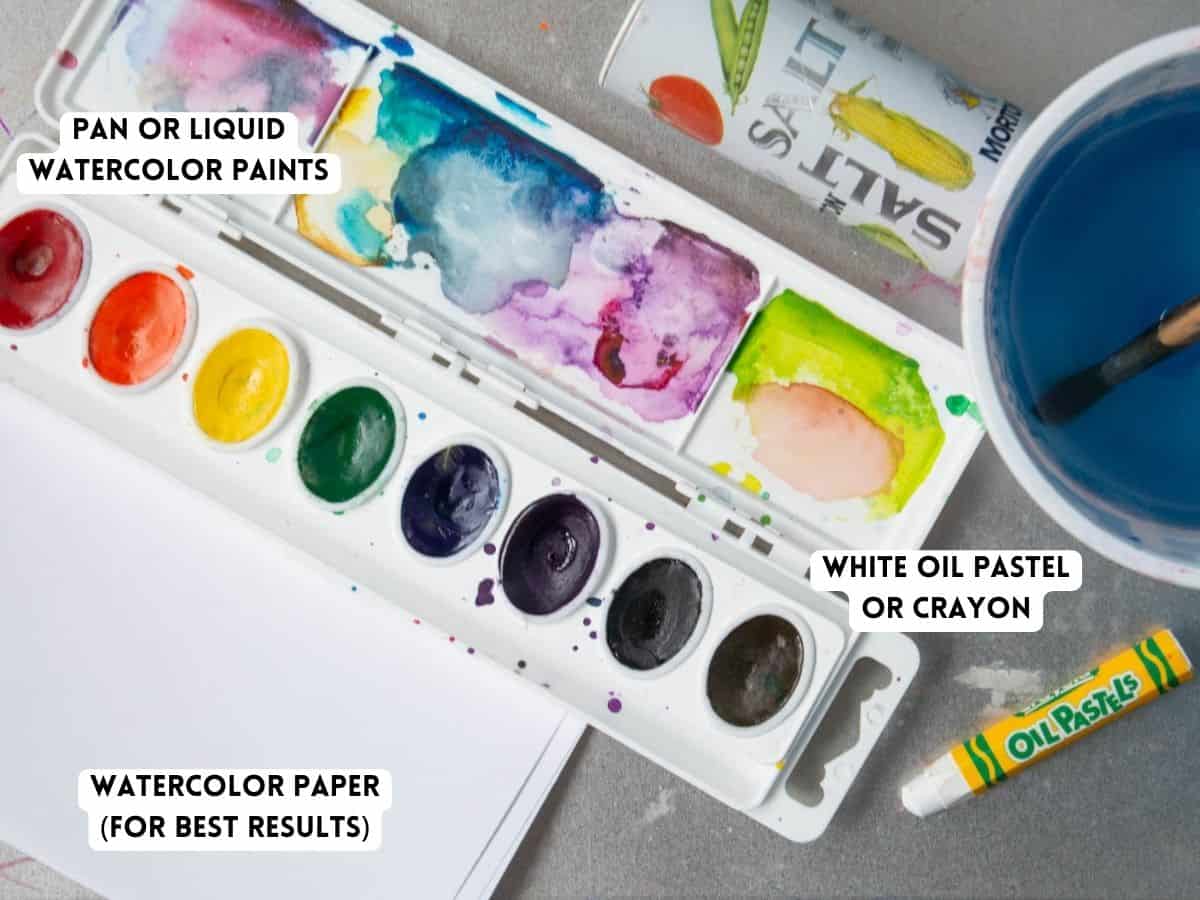
Supplies you’ll need
Disclosure: This post may contain affiliate links when clicked, we may earn a small commission at no additional cost to you. Read our full privacy policy.
Notes On Supplies
- When painting in watercolor, watercolor paper yields the best results. This is a great scholarly watercolor paper pack to buy!
- Instead of salt, you can experiment with other watercolor techniques using these optional supplies: painter’s tape, rubber cement, or cling wrap.
- Liquid watercolor paint will give you more vibrant colors, but a regular watercolor palette will do the trick as well.
How To Create Magical Heart Paintings
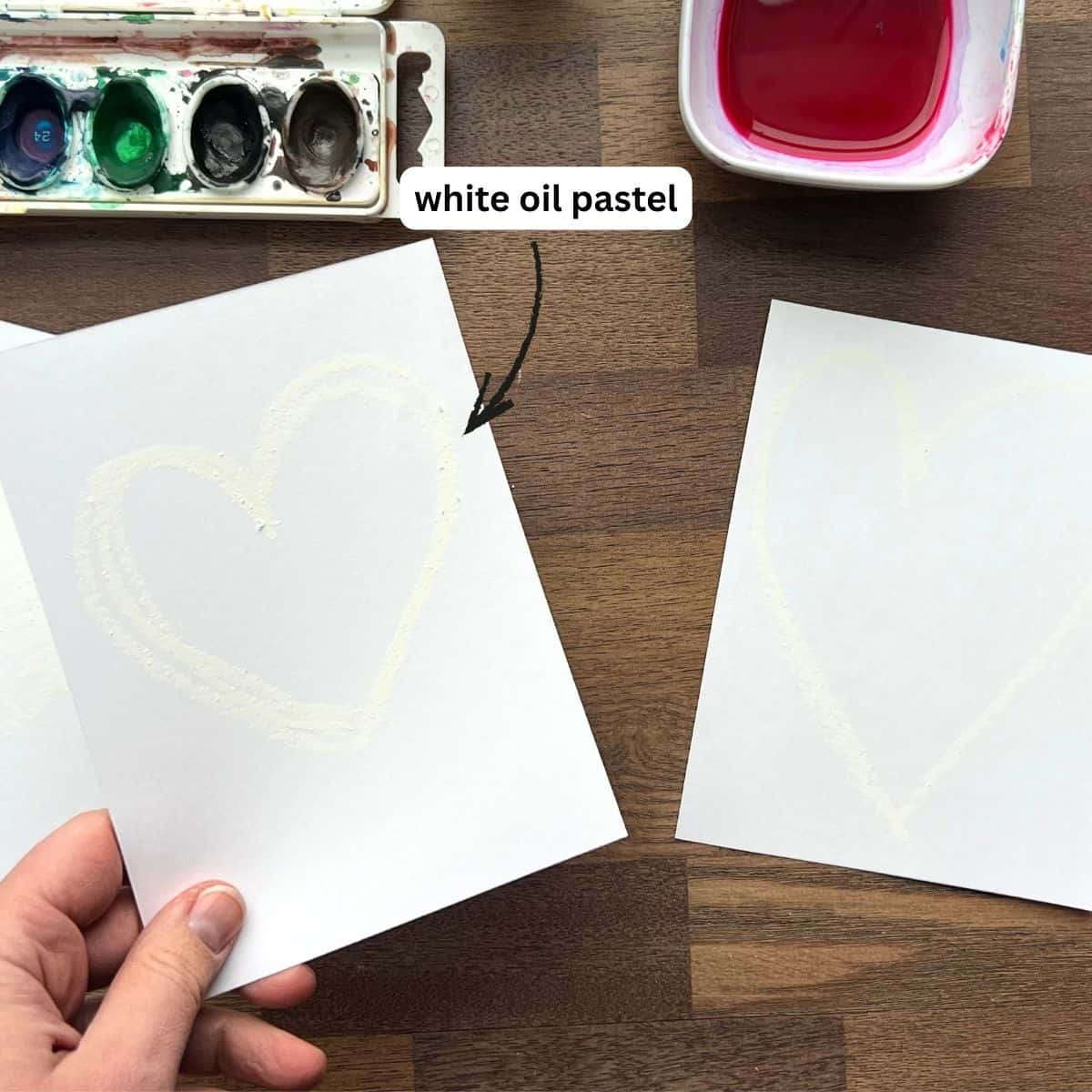
Step 1: Draw Hearts
Use a white crayon or oil pastel to draw simple heart shape. Make sure to press hard enough to get the wax or oil on the paper. It is hard to see the white on white, but if you hold it at an angle, you can see where you put the drawing material.
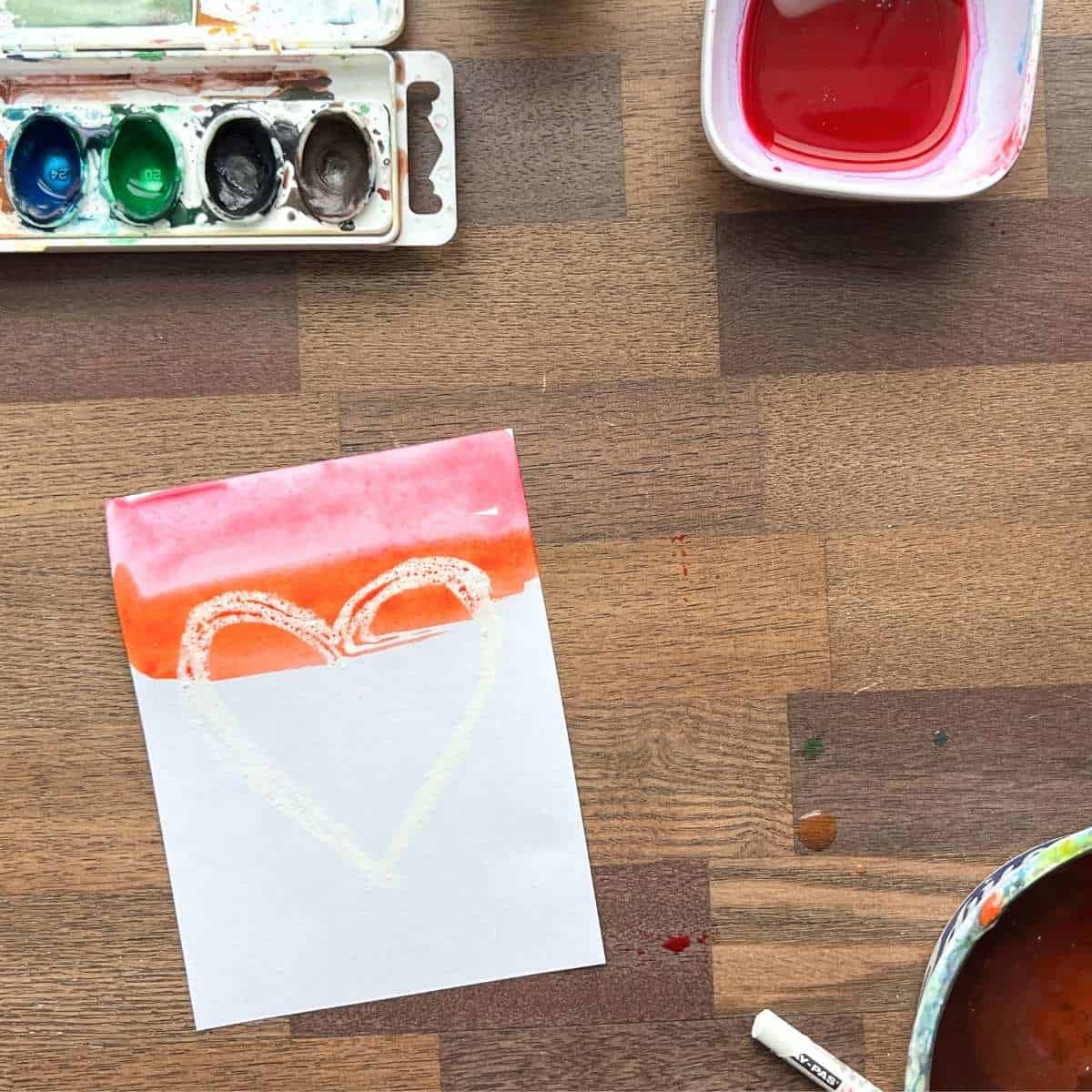
Step 2: Paint A Light Water Wash
This art technique works best if you paint a light water wash before adding the paint. Add watercolor paint.
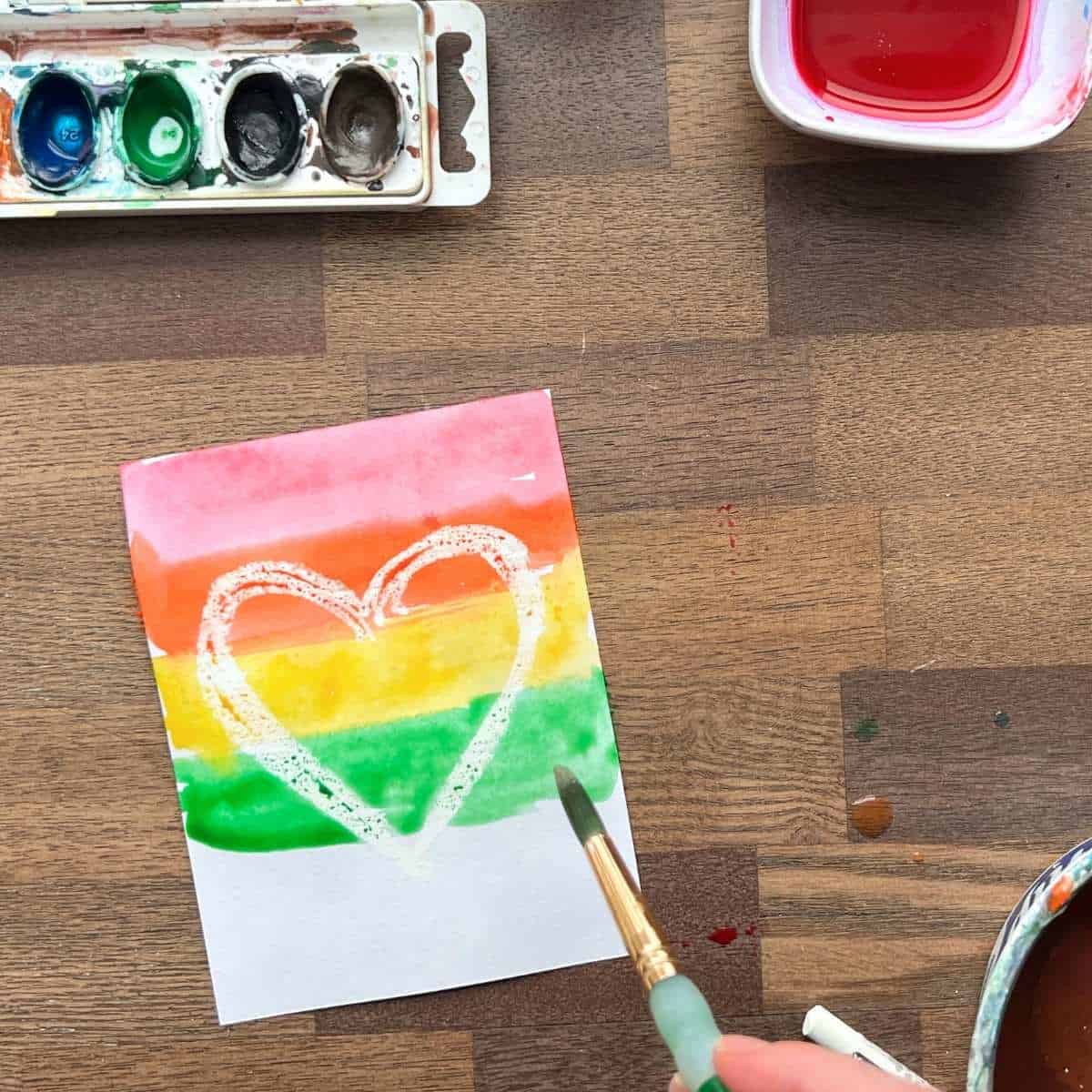
Step 3: Continue Painting
Use colors next to each other on the color wheel to avoid a brown mess.
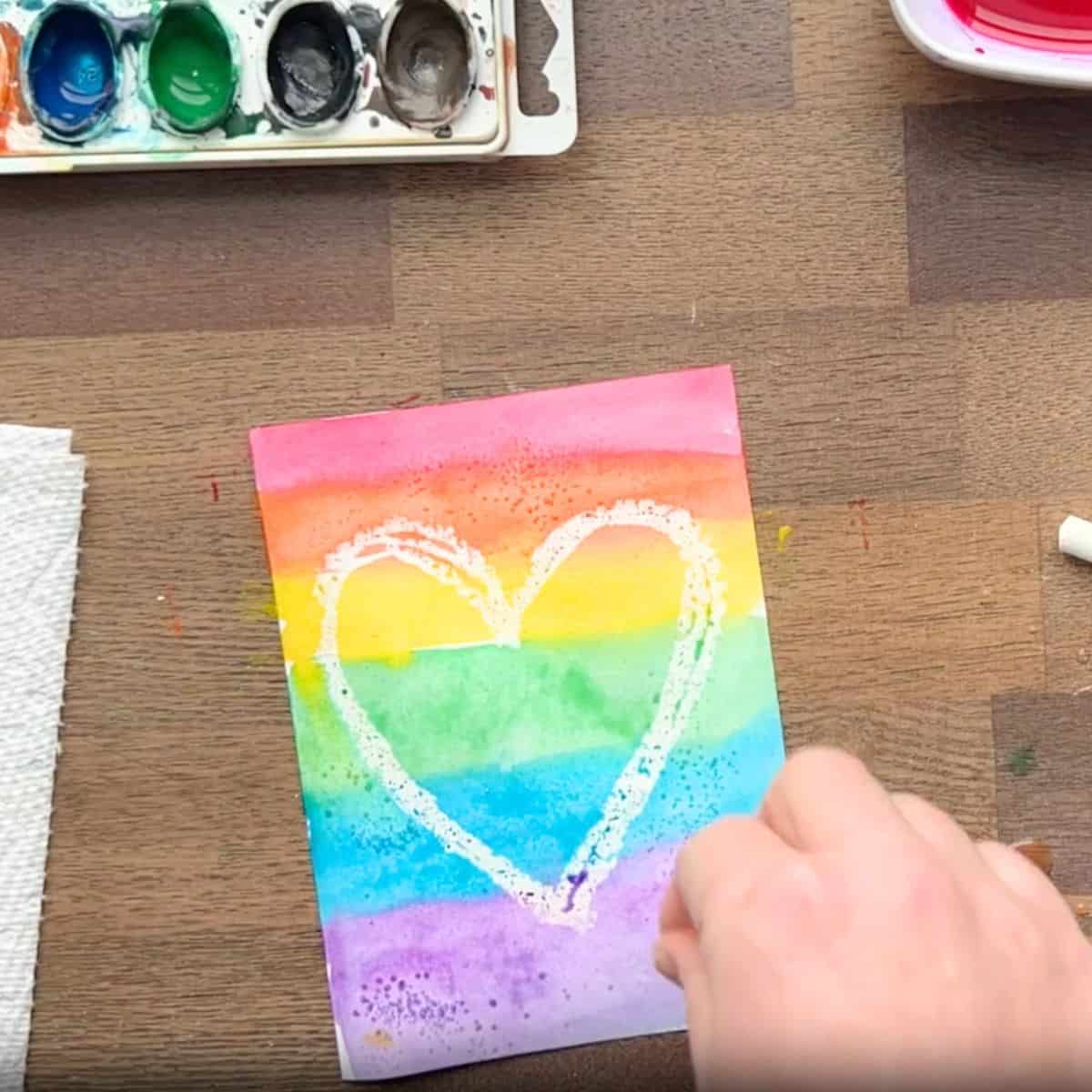
Step 4: Add Texture
You can sprinkle salt on the wet paint or place a clear wrap on top. With young children, we advise using only a little sprinkle.

Step 5: Let Dry
Let your awesome heart paintings dry. Pull off any clear wrap and see the cool texture. You can lightly brush the salt off or leave it for added texture.
Optional: Flatten Paintings
If you use small papers, you may want to put a heavy book on top to help flatten them.

ART TEACHER TIP – You will see how the salt absorbs the paint. If you are not seeing that, then add a little extra drop of water without touching the brush to the paper.
Tips
- MAY NEED TO ADD EXTRA WATER – If using liquid watercolors or can’t see the heart, you may need to dilute the paints more for the magic to happen.
- USE MORE THAN WHITE – Try neon oil pastels and other colors for vibrant heart paintings.
- PRESS HARD – Apply enough pressure with the drawing material.
- USE THICKER PAPER – Getting this watercolor resist technique to work using regular, lightweight copy paper will be difficult. You can always test your materials beforehand to ensure they will work.
- TEST DRAWING MATERIALS – Washable crayons or certain brands of crayons may not work as well. We recommended an oil pastel for the best results. A regular Crayola white crayon will also work.
Follow us on Pinterest, YouTube & Facebook for more free art and craft ideas!
Our Favorite
Heart Art Ideas
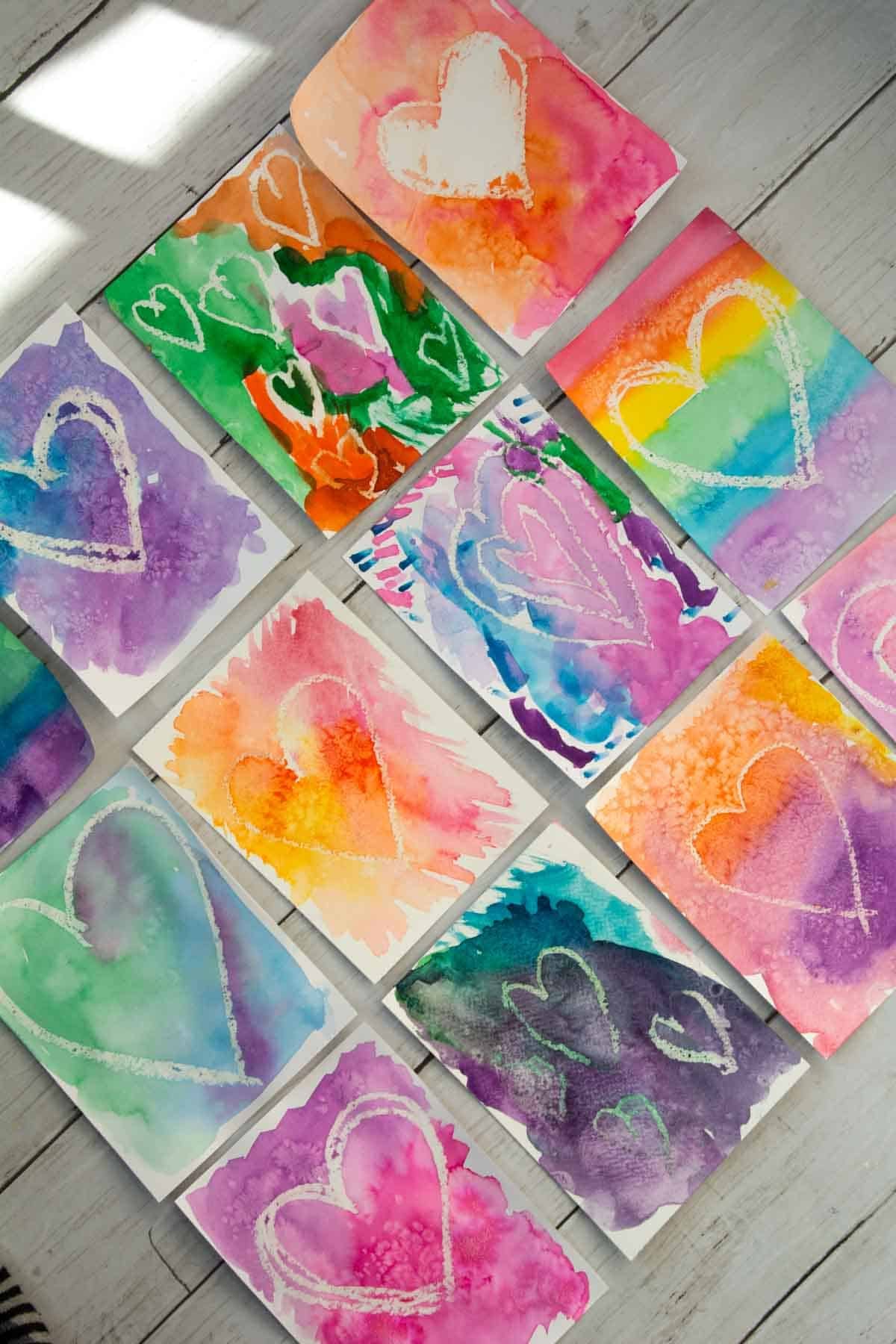
Simple painting techniques and projects are the perfect way for children to explore their creativity and for families to have fun together. Magical heart paintings are always so fun to make together.
Do you like this art project? Please give us a 5-STAR review below ⭐️⭐️⭐️⭐️⭐️ and have fun being creative with your family.
Magic Heart Art Painting With Salt and Watercolor

Equipment
- Water container
Supplies
- Thick White Paper Watercolor Paper works best!
- Watercolor Paint
- White Oil Pastels
- Salt
Instructions
- Draw a simple heart design with a white oil pastel or white crayon. Press hard.
- Paint a water wash over the background to help your paint colors mix on the paper.
- Add watercolor paint to the background. You can brush right over where you put oil pastels.
- Optional: Add salt or add paint splatters to your painting once it is dry.
Notes
- Watercolor paper will yield the best results.
- A high-quality white crayon can be substituted for an oil pastel.
- Do not use copy paper.